
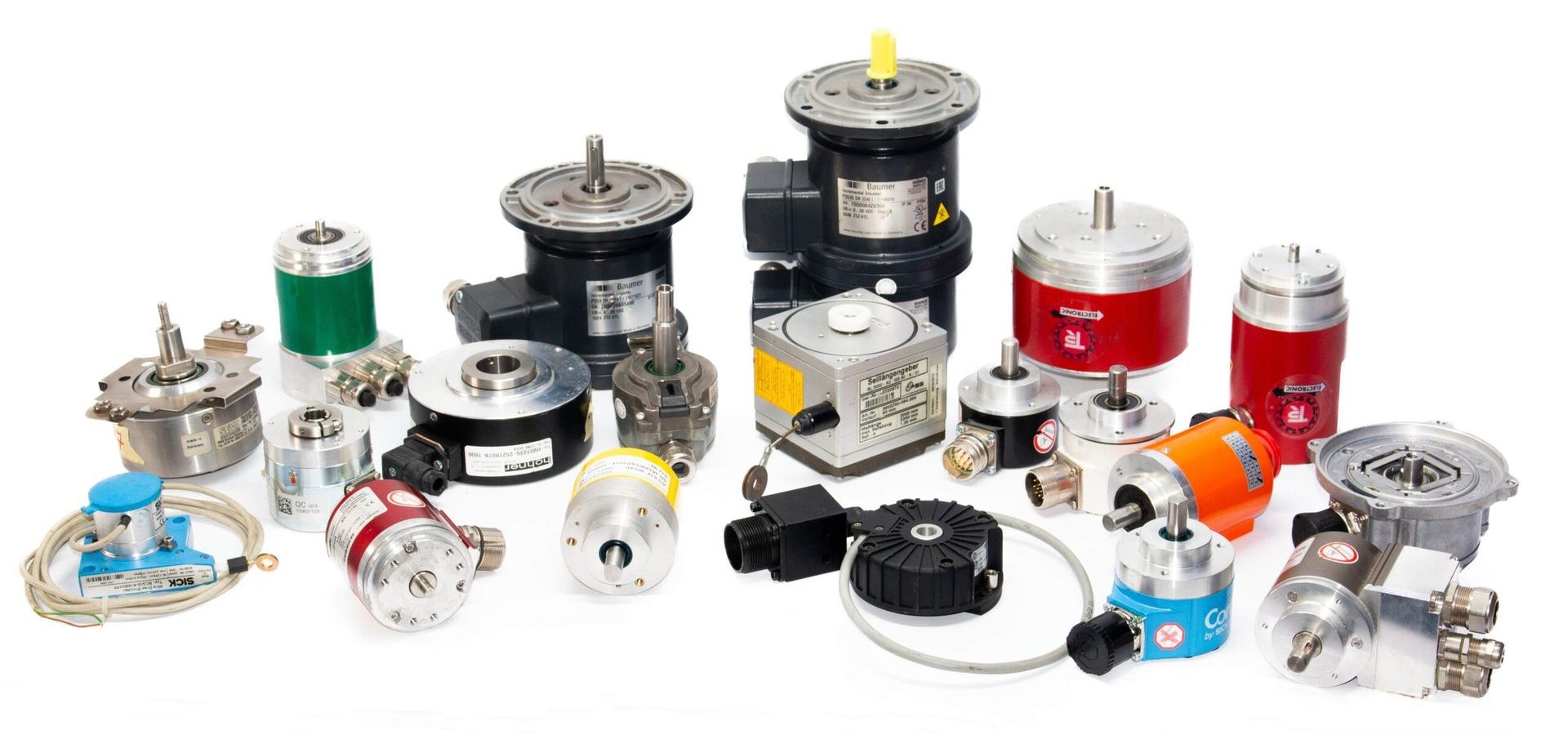
Encoders convert rotational position into an electrical signal, and they are one of the most common failure points on servos, motors, and positioning tables. The reasons are usually mechanical: shaft coupling wear, bearing failure, vibration, contamination, or cable damage.
Diagnose before you replace
Before replacing, identify what failed. If the machine lost position feedback suddenly, the encoder cable or connector is often the culprit — check for broken wires or a loose plug before buying a new encoder.
Incremental encoders
Incremental encoders output pulses (A, B, and often Z) that count movement from a known start point. They are simple, cheap, and fine for speed control and positioning that is re-referenced at start-up. If your machine does a home cycle every time it starts, an incremental encoder is likely what you have.
Absolute encoders
Absolute encoders output a unique code for every position, so the controller knows the exact position even after a power loss — no homing required. They come in single-turn and multi-turn versions. Multi-turn absolute encoders are used on machines that must retain position over many revolutions, such as CNC axes and robotic joints.
Compatibility matters
You need the same mounting style (shaft or hollow), the same electrical interface (push-pull, RS-422/TTL, SSI, Profinet), and for absolute encoders, the same resolution and code type (Gray or binary, single-turn or multi-turn).
Our Encoders category includes new and refurbished units from Heidenhain, SICK, Leine & Linde, and others. Search by the part number on the encoder nameplate, or send us the brand, model, and a photo for cross-referencing.