Hydraulic and pneumatic systems both use fluid power to move actuators, but they are suited to different jobs.
Pneumatic systems: speed and simplicity
Pneumatic systems use compressed air. They are fast, clean, lightweight, and inexpensive to install. They are the right choice for pick-and-place operations, clamping, packaging machines, and any application where you need quick, repetitive motion with moderate force. Because air is compressible, pneumatic systems are also inherently compliant — they can absorb shock without damaging the machine.
Hydraulic systems: force and precision
Hydraulic systems use incompressible oil, which lets them deliver very high forces in compact packages. Excavators, presses, injection molding machines, and heavy lifting equipment are almost always hydraulic. Hydraulic actuators can hold position under load without drifting, which is why they dominate mobile and heavy industrial equipment.
The trade-offs
Hydraulics require oil, filtration, and careful sealing — leaks and contamination are the main failure points. Pneumatics require a reliable compressed air supply with proper conditioning (filter, regulator, lubricator), and they cannot match hydraulic force density.
Key components
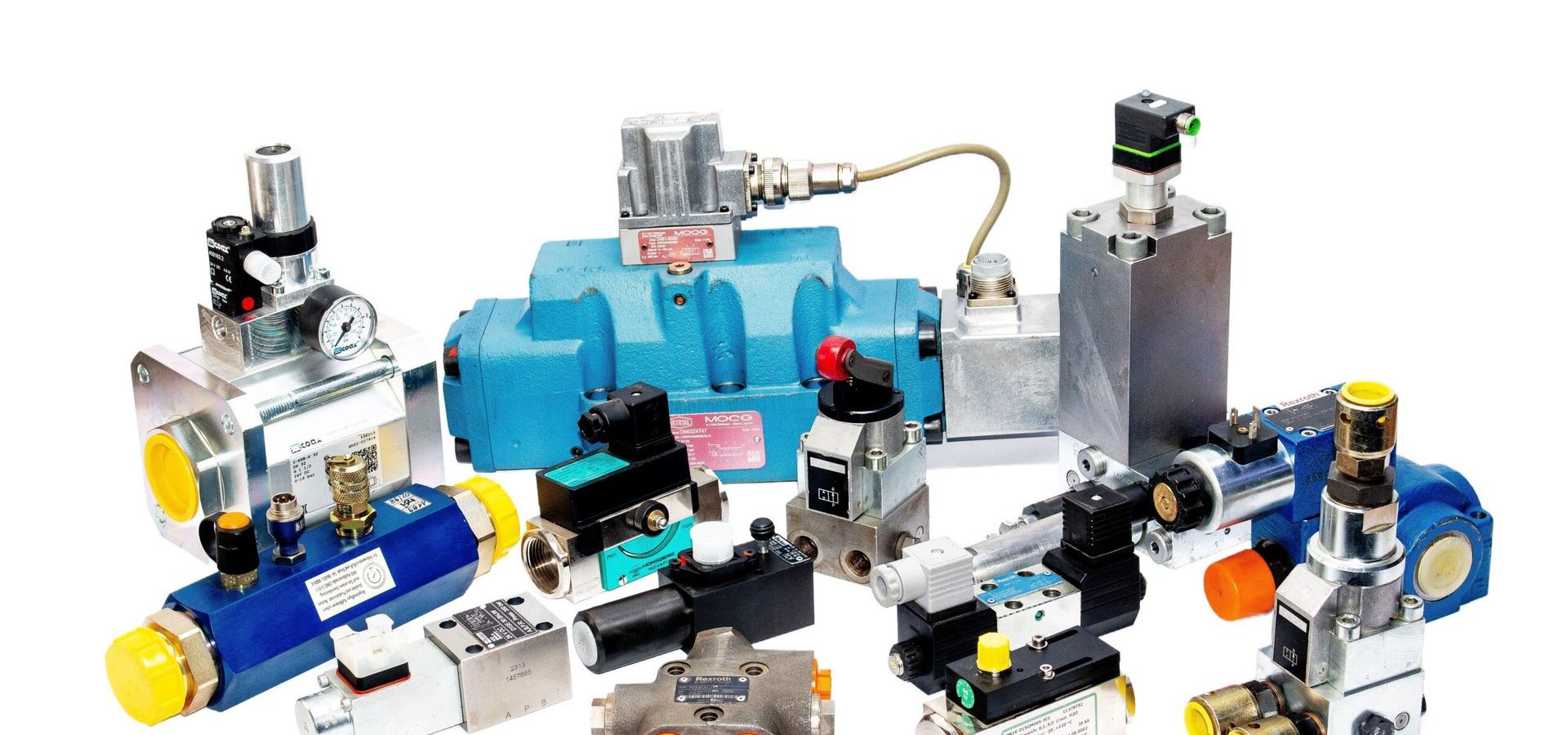
You will need cylinders (tie-rod, welded, compact), directional control valves, pressure regulators, filters, hoses and fittings, and seals for either system. For hydraulics, add pumps, accumulators, and relief valves.
Browse our Hydraulic System and Pneumatic System categories for new and refurbished components, or send us the brand and model stamped on your cylinder or valve for a matched replacement.