
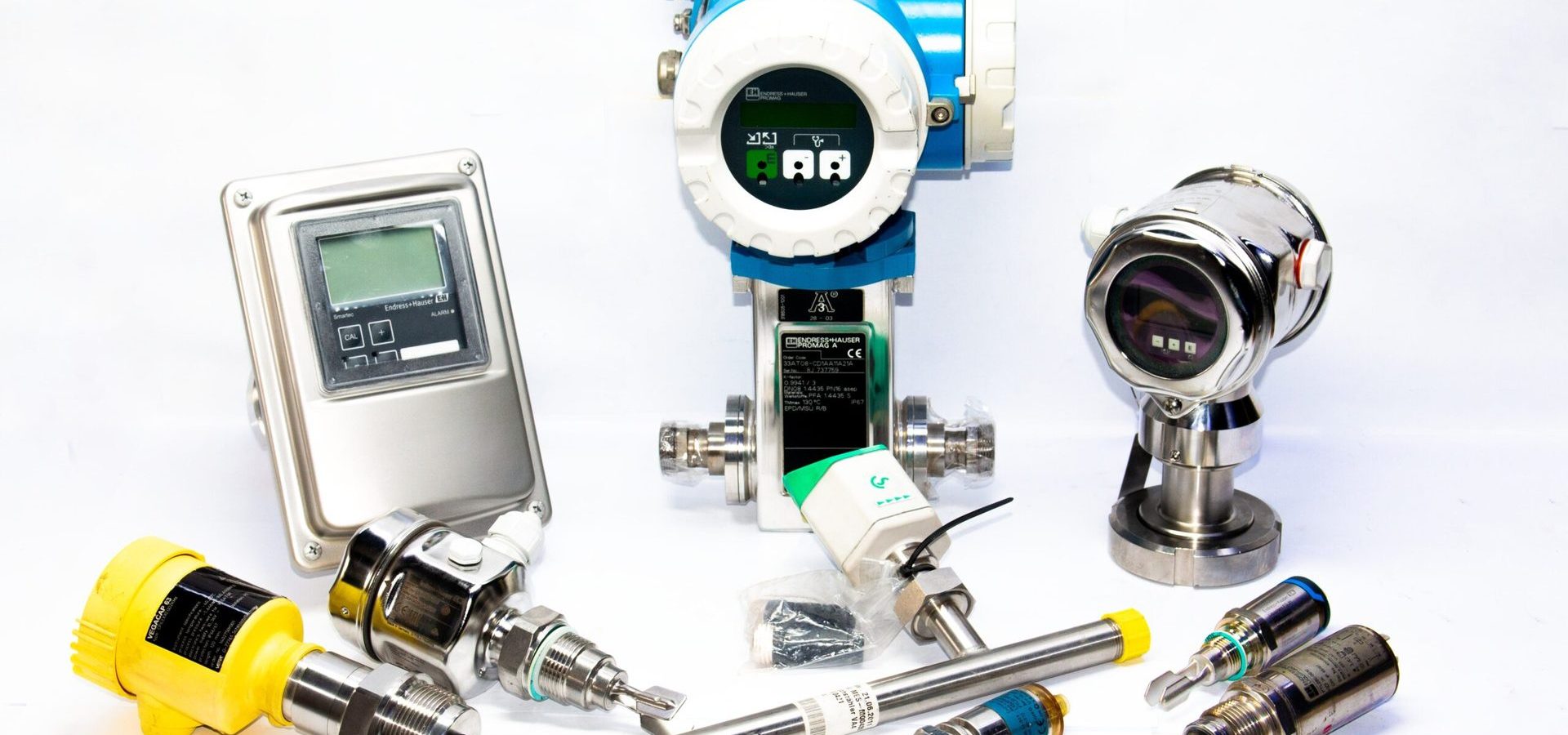
The three most common detection technologies in industrial automation are photoelectric sensors, inductive proximity sensors, and mechanical limit switches. They answer the same question — is something there? — but each has different strengths.
Mechanical limit switches
Mechanical limit switches are the most robust and the simplest. A physical lever or roller makes contact with the moving part, so they work in dusty, dirty, and even wet environments where optical sensors would fail. They are ideal for position detection on conveyors, crane end-of-travel, and machine guards. The trade-off: moving parts wear out, and detection is slower than electronic sensors.
Inductive proximity sensors
Inductive proximity sensors detect metal targets without touching them. They are the default for detecting metal parts on production lines, pneumatic cylinder positions, and metal detection in general. Because they are non-contact, they last far longer than limit switches. They only work on metal, so they are not suitable for plastic, wood, or liquids.
Photoelectric sensors
Photoelectric sensors detect virtually any material — metal, plastic, paper, glass, liquids — using light. Through-beam sensors give the longest range and best reliability in clean environments. Retro-reflective sensors are easier to install (emitter and receiver in one housing, with a reflector). Diffuse sensors are the simplest but have shorter range and are affected by target color and background.
How to choose
If the target is metal and close range: inductive proximity. If you need to detect any material at a distance: photoelectric. If the environment is very dirty or you need a simple mechanical interlock: limit switch.
Browse our Sensors category to find parts from SICK, ifm, Omron, Telemecanique, and other brands — search by MPN or send us your application details for a recommendation.